
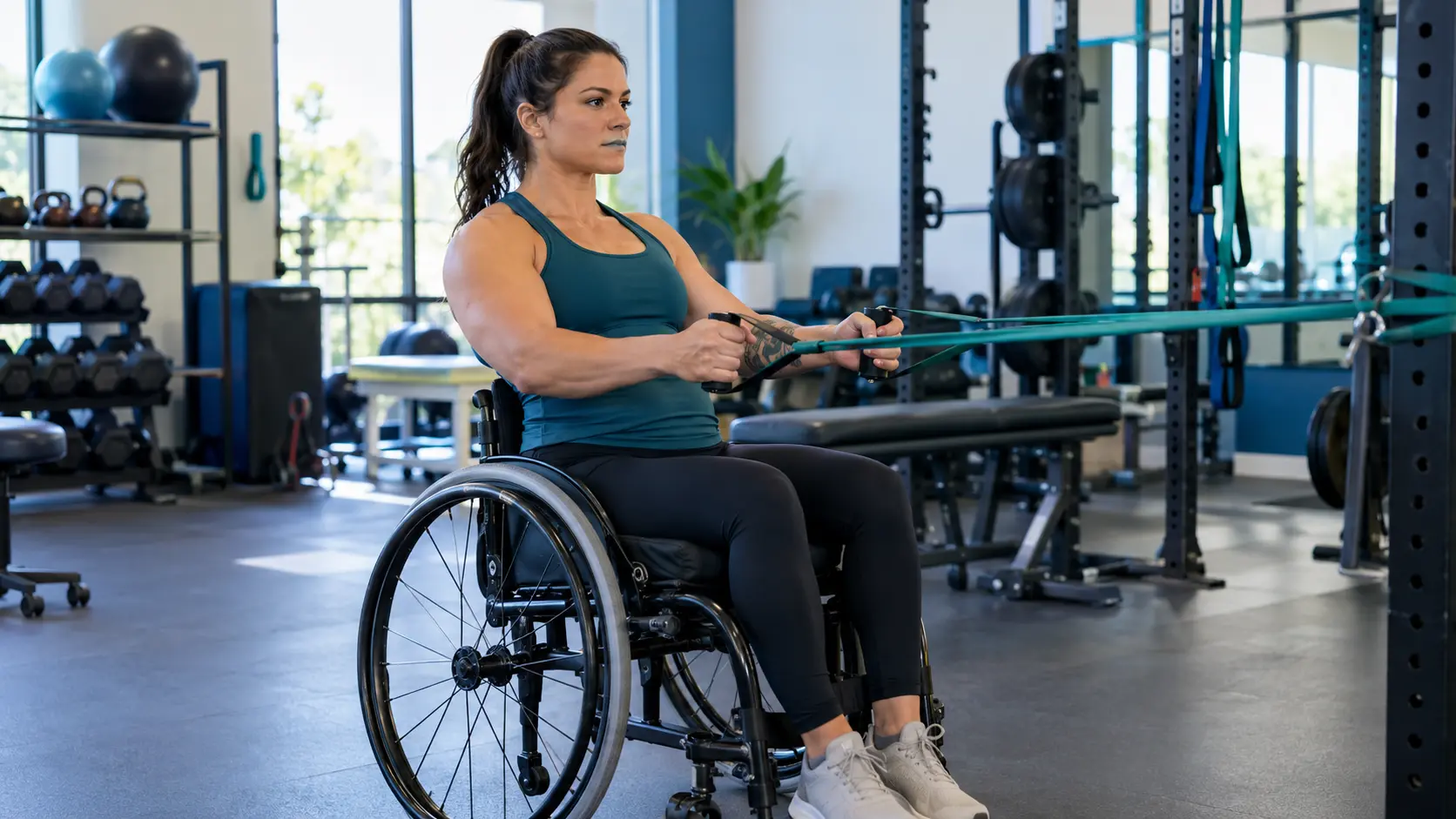
The short answer is:
Yes, the NDIS can fund Exercise Physiology when it is an appropriate disability-related support and fits within the funding available in your plan.
If you have an NDIS plan, working out whether you can use it for Exercise Physiology can be surprisingly confusing.
You might have funding for “Capacity Building”. Your plan might mention “Improved Health and Wellbeing”. Your support coordinator may have suggested an Exercise Physiologist, but you’re not sure whether you need a referral, which part of your funding pays for it, or how to actually get started.
Physiotherapy can also be funded in appropriate circumstances.
The important distinction is that the NDIS isn’t funding exercise simply because exercise is good for your health. The support needs to relate to your disability, functional needs and the supports included in your plan.
If you’re not sure whether your current funding can be used for Exercise Physiology, you, your family, plan manager or support coordinator are welcome to contact us before booking.
What is the NDIS?
The National Disability Insurance Scheme (NDIS) is the way the Australian Government funds support for people with permanent and significant disability. Instead of a one-size-fits-all service, each participant gets an individual plan built around their own goals, with funding split across categories like Capacity Building, Core Supports and Capital Supports depending on what they need. Exercise Physiology sits inside Capacity Building, specifically under Improved Health and Wellbeing which is why not every NDIS plan automatically includes it, and why the funding is tied to your disability-related goals rather than general fitness.
Does the NDIS cover Exercise Physiology?
Yes.
Exercise Physiology is specifically recognised by the NDIS as a support that may be funded when it meets the NDIS funding criteria.
The NDIS specifically lists working with an Exercise Physiologist on an exercise plan as an example of a support within Improved Health and Wellbeing.
The important distinction is that the NDIS isn’t funding exercise simply because exercise is beneficial.
The service needs to relate to the impact of your disability and be an appropriate use of the funding available in your plan.
For example, Exercise Physiology might be used to help:
- improve strength for everyday activities
- improve mobility and balance
- increase physical capacity and endurance
- maintain physical function
- build greater independence
- improve your capacity to participate in work, education or the community.
The question isn’t simply:
“Would exercise be good for me?”
It is:
“Can Exercise Physiology help address the functional impact of my disability and support what I’m trying to achieve?”
How can Exercise Physiology help with NDIS goals?
An Accredited Exercise Physiologist, or AEP, is a university-qualified allied health professional who uses exercise to help people manage chronic and complex health conditions and improve physical function.
For someone accessing Exercise Physiology through the NDIS, we want those improvements to translate into meaningful everyday outcomes.
For example, one participant might want to develop enough leg strength to make transfers easier and become more independent at home.
Another person might fatigue quickly when walking and want to improve their physical capacity so they can participate more comfortably in work, education or community activities.
Someone else may need to maintain strength, balance and mobility because their disability places these abilities at risk of declining.
The exercises themselves aren’t the end goal.
What that improved physical capacity allows you to do is the important part.
That’s also why NDIS Exercise Physiology shouldn’t simply look like personal training with a different name.
There should be a clear connection between your assessment, exercise program, disability-related needs and the outcomes you’re working towards.
Can NDIS participants see a physiotherapist?
Yes.
Physiotherapy can also be funded through the NDIS when it is an appropriate disability-related support and meets the relevant NDIS funding criteria.
Physiotherapy and Exercise Physiology can overlap, but they’re not identical.
A physiotherapist may be involved in assessing and managing movement problems, mobility, rehabilitation, pain and physical function.
An Exercise Physiologist primarily uses appropriately prescribed exercise to build or maintain physical capacity and function.
Depending on your needs, you might work with one profession or both.
The important question isn’t which profession sounds better on paper.
It’s which support is appropriate for your needs and goals.
You can read our Exercise Physiology guide for a more detailed explanation of what an AEP does and how Exercise Physiology differs from general fitness training.
What NDIS budget category does Exercise Physiology come under?
Under the current NDIS structure, Exercise Physiology is specifically listed within Capacity Building, Improved Health and Wellbeing.
“Capacity Building” simply means supports designed to help build your skills, independence and ability to participate in everyday life.
The NDIS describes Improved Health and Wellbeing as funding for supports that help improve physical and mental wellbeing. Working with an Exercise Physiologist on an exercise plan is one of the examples specifically provided by the NDIS.
Other allied health therapy supports may appear elsewhere within Capacity Building depending on the participant’s plan and the purpose of the support.
Capacity Building funding is also generally allocated to particular categories rather than being completely interchangeable.
This is why it’s worth checking your actual plan rather than assuming that having an NDIS plan automatically means a particular service is funded.
If you have a plan manager or support coordinator, they can help clarify what funding is available.
You can also contact us before booking and we’ll help you work through the practical side.
How does the way my NDIS plan is managed affect Exercise Physiology?
NDIS funding can be self-managed, plan-managed or NDIA-managed.
The main difference for you is how providers are chosen and how services are paid for.
Self-managed
If your relevant funding is self-managed, you have greater responsibility for managing your NDIS funding, paying providers and keeping the appropriate records.
Self-managed participants can generally use either registered or unregistered providers, except for particular supports where registered providers are specifically required.
Plan-managed
If your funding is plan-managed, a registered plan manager handles the financial administration on your behalf.
Your provider sends invoices to your plan manager, who pays them from the appropriate funding in your plan.
Plan-managed participants can also generally access registered or unregistered providers, subject to the requirements that apply to the particular support.
NDIA-managed
If your funding is NDIA-managed, the arrangements are different.
NDIA-managed supports need to be provided through an appropriately registered NDIS provider.
If you’re unsure which arrangement you have or how your Exercise Physiology services can be set up, contact us before booking.
Participants, families, plan managers and support coordinators are all welcome to get in touch so we can confirm the appropriate pathway before you start.
What does an NDIS Exercise Physiology session involve?
You don’t need to arrive fit.
You don’t need to know how to use gym equipment.
And your first appointment isn’t simply being handed a workout.
We start by understanding you.
An initial Exercise Physiology assessment may consider your:
- NDIS goals
- disability and relevant health history
- current physical activity
- mobility
- strength
- balance
- cardiovascular fitness
- functional capacity
- barriers to being active
- activities you would like to become more independent with.
What we assess depends on what you’re trying to achieve.
Someone whose main difficulty is walking and balance needs a different assessment from someone whose priority is developing strength and endurance for work or community participation.
From there, we develop an individualised exercise program.
That might include resistance training, balance exercises, cardiovascular exercise, mobility work or movements that relate directly to everyday activities.
The starting level can vary enormously.
For some participants, exercise may begin very gently.
Others may already be comfortable training in a gym and need a considerably more challenging program.
The aim is to progressively build or maintain physical capacity in a way that is relevant to you.
What about NDIS reports?
Exercise Physiology isn’t only about what happens during the session.
Measuring outcomes and documenting progress can also be important.
Depending on your goals, we may track changes in areas such as:
- strength
- balance
- mobility
- cardiovascular fitness
- exercise tolerance
- functional capacity
- independence with particular activities.
Where appropriate and agreed, reports can document what we’ve been working on, changes we’ve measured, progress towards relevant goals and recommendations for ongoing support.
This information can be useful when communicating with your support coordinator, plan manager or other members of your healthcare team.
It can also provide objective information about how Exercise Physiology is contributing to your functional goals.
Do I need a GP referral for NDIS Funded Exercise Physiology?
Generally, you do not need a GP referral simply to see an Exercise Physiologist using appropriate NDIS funding.
That’s different from accessing Exercise Physiology through certain Medicare pathways.
We will still ask about your disability, medical history, medications and any health conditions that could influence exercise.
In some circumstances, it may also be useful for us to communicate with your GP, specialist, physiotherapist or another member of your healthcare team.
That’s about providing coordinated and appropriate care, rather than creating another step before you can exercise.
Do I need a service agreement?
A service agreement may be established before commencing NDIS-funded services.
A service agreement simply makes the practical arrangements clear.
It can outline:
- what services will be provided
- how those services will be delivered
- fees and invoicing arrangements
- cancellation policies
- the responsibilities of the participant and provider
- how the agreement can be changed or ended.
The NDIS recommends service agreements because they help participants and providers understand what has been agreed.
We’ll explain any relevant agreement and arrangements with you before services commence.
How do I start NDIS Funded Exercise Physiology at VIBE?
You don’t need to understand every piece of NDIS terminology before contacting us.
It helps to have some basic information available, including your:
- relevant NDIS plan information
- goals
- funding management type
- plan manager’s details, if you’re plan-managed
- support coordinator’s details, if you have one
- relevant medical or allied health reports.
We’ll first discuss what you’re looking for and whether Exercise Physiology is an appropriate service for your needs.
We can then confirm the appropriate funding and invoicing pathway and organise your initial assessment.
Participants can contact us directly.
Parents and carers are welcome to contact us.
Support coordinators and plan managers are also very welcome to call us directly if you’d like to discuss whether Exercise Physiology is appropriate for someone you’re supporting.
NDIS, Medicare and private health: which one should I use?
These are different funding systems with different purposes.
NDIS funding is used for eligible disability-related supports in accordance with your NDIS plan.
Medicare may contribute towards eligible allied health services for people with chronic medical conditions through a GP Chronic Condition Management Plan.
Private health insurance may provide extras benefits for Exercise Physiology or Physiotherapy depending on your individual policy.
Someone can potentially access more than one of these funding systems for different services or purposes.
What you cannot do is claim the same service twice.
For example, someone may use NDIS funding for an Exercise Physiology program specifically addressing disability-related functional needs, while separately accessing healthcare through Medicare for management of another chronic health need where they meet the relevant requirements.
If you’re unsure how Medicare-funded allied health works, our Medicare Chronic Condition Management Plan guide explains that pathway separately.
Not sure whether Exercise Physiology fits your NDIS plan?
You don’t need to work that out alone before contacting us.
Exercise Physiology can be funded through the NDIS when it is an appropriate disability-related support and fits within the participant’s available funding.
For some people, the goal is improving mobility.
For others, it’s strength, balance or endurance.
For someone else, it may be maintaining enough physical capacity to remain as independent as possible.
The program should always come back to your needs, your goals and your life.
If you’re an NDIS participant, parent, carer, plan manager or support coordinator and you’re unsure whether Exercise Physiology is appropriate or how your funding can be used, contact our Homebush or Seven Hills clinic.
We can talk through what you’re looking for, confirm the appropriate pathway and discuss whether our Exercise Physiology service is the right fit.
You can also visit our Exercise Physiology page to learn more about what we do or use our online booking page to get started.