
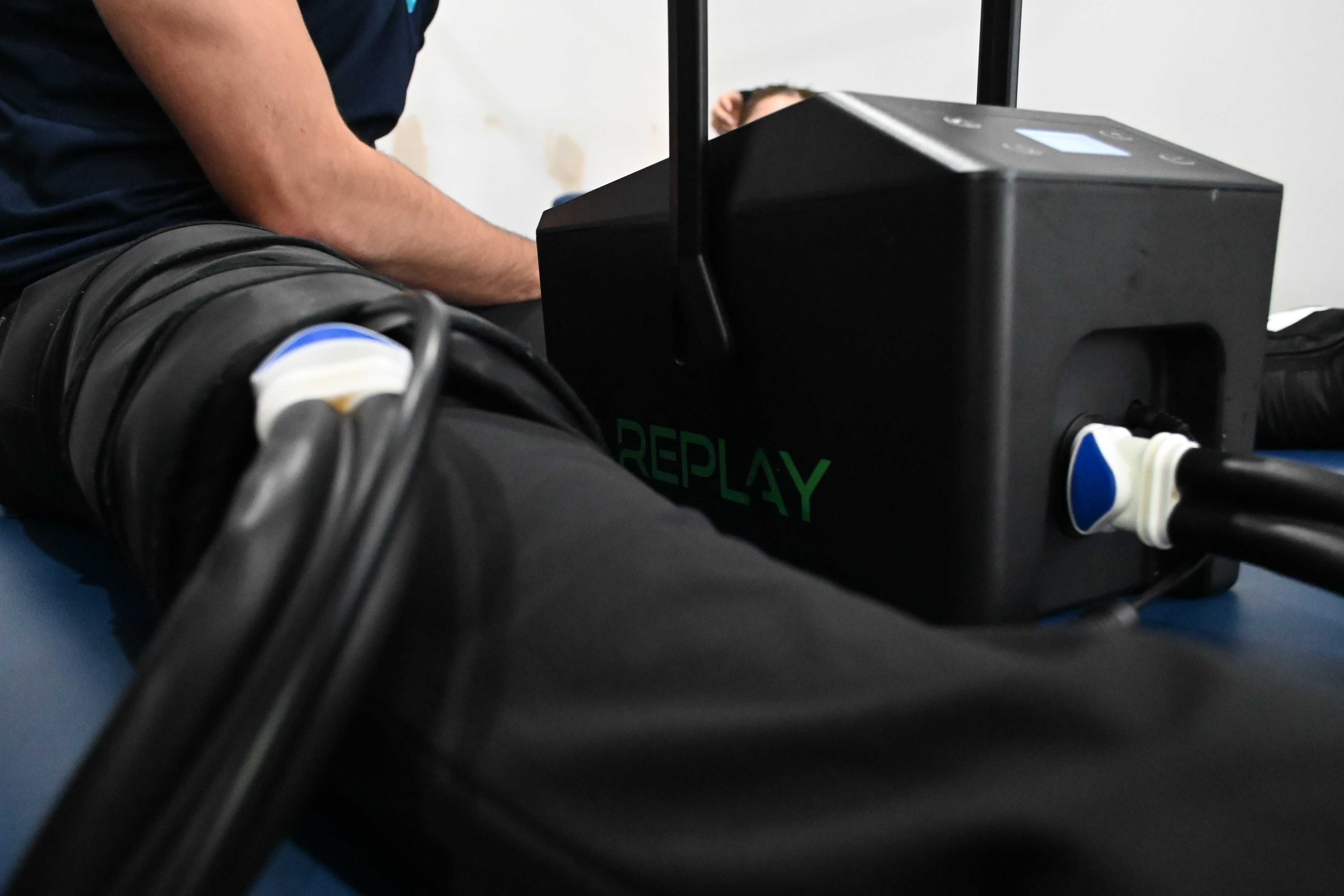
Ice vs Heat
For decades, the answer to almost any injury was the same: RICE. Rest, Ice, Compression, Elevation. It was on every first aid poster and in every sports bag.
Here’s the thing, the evidence has moved on, and even the doctor who coined the term back in 1978 has changed his view. The current research tells a more useful story: ice and heat each have a legitimate role, but most people use both at the wrong time.
Here’s how to actually decide.
What Ice Does (And Doesn’t Do)
Ice numbs the area, reduces pain, and helps manage swelling and inflammation. That’s genuinely useful, and it’s the main reason to use it.
Inflammation isn’t a malfunction, it’s your body’s repair process, delivering cells that clean up damaged tissue and start rebuilding. But in the early stages of injury, particularly joint injuries, that inflammatory response can produce significant swelling that increases pain and slows your return to movement. Ice helps keep that under control.
So the modern position is this: use ice across the first 1-4 days of an acute injury (a rolled ankle, a joint knock, a muscle strain) to manage pain and limit swelling. Ten to fifteen minutes at a time, with a cloth between the ice and skin. After the inflammatory phase has passed, put it away and let the repair process do its job.
What Heat Does
Heat increases blood flow and relaxes muscle tissue. That makes it the better choice for:
- Stiff, tight muscles: the stiff neck after a day at the desk, the tight calves the morning after a hilly run.
- Before activity: 10-15 minutes of heat on a chronically stiff area before exercise can help it move better.
- Ongoing, non-acute aches: long-standing lower back tightness responds better to heat and movement than to ice.
The one time to keep heat away is on a fresh injury that’s already hot, swollen, or bruised. Adding heat in the first few days can make it worse. Adding heat to acute swelling in the first 48 hours can make it worse.
How to decide: Ice or Heat?
Just happened, painful, swelling? → Ice for pain relief, 10-15 minutes at a time, first 1-4 days.
Stiff, tight, or achy — but nothing “happened”? → Heat, then move.
Sore all over after a hard session (DOMS)? → Honestly, neither does much. Easy movement, sleep, and food beat both.
More than 4 days in and still icing? → Stop. If it still hurts enough that you’re reaching for ice every day, it needs assessing, not numbing.

A Note on Ice Baths
This one is more nuanced than it first appears. Ice baths can reduce soreness perception after hard sessions. But for most people in a training block (trying to get fitter, stronger, or faster) regular post-session ice baths may actually work against you. The inflammatory response they’re blunting is part of how your body adapts to training. Blunt it routinely and you may be slowing down your own progress.
That said, there’s a specific context where ice baths earn their place: the competitive season, with short turnarounds between games or events.
If a rugby player has 72 hours until the next match, or a swimmer is racing again tomorrow, the goal isn’t adaptation, it’s performance recovery. Getting the body feeling as close to fresh as possible, as quickly as possible. In that context, managing inflammation and reducing soreness in the short term is exactly the point. Ice baths make sense here, not as a training tool, but as a recovery accelerator between competitions.
The distinction: Are you trying to improve, or are you trying to perform again soon? The answer changes what you should do.
What Replaced RICE
The current framework in sports medicine is PEACE & LOVE – yes, just like the 70’s, and the biggest shift it represents is this: the goal isn’t to switch off your body’s response to injury but to protect briefly, then reload progressively.
In plain terms, for a typical soft tissue injury:
- First 1-4 days: Protect it. Avoid the movements that genuinely hurt, manage pain (ice is fine here), keep the swelling under control with compression and elevation. Skip anti-inflammatories in the first couple of days if you can, same logic as the ice.
- From there: Start moving. Gentle, pain-guided movement and gradually increasing load is what actually drives tissue healing. “Let pain guide you” means discomfort up to about a 3/10 is acceptable; sharp or worsening pain is not.
- Then: Build back up progressively until the tissue can handle what your sport demands. This is where criteria-based rehab comes in. You progress when your body meets the criteria, not when the calendar says so.
The pattern is the same one behind everything else this month: tissues adapt to the load you give them. Total rest doesn’t rebuild capacity. Smart loading does.
When Ice vs Heat Is the Wrong Question
If you’re three weeks into a niggle and still debating ice or heat, the honest answer is that neither is going to fix it. Both are comfort tools. They manage symptoms while the actual work (appropriate loading, addressing why it happened) gets done.
Pain that hangs around past two weeks, keeps returning every time you train, or is changing how you move is worth a proper look. Our physios, chiros, and exercise physiologists at Homebush and Seven Hills can work out what’s actually driving it and build you a plan back. Book online or call 1800 4 VIBES.
FAQs
Should I use ice or heat on an injury?
Use ice for fresh, acute injuries in the first 1-4 days to manage pain and swelling, 10-15 minutes at a time. Use heat for stiff, tight muscles and ongoing non-acute aches, ideally before movement. Never apply heat to a fresh injury that’s swollen or bruised.
Is the RICE method outdated?
Largely, yes. Research no longer supports prolonged icing or complete rest for soft tissue injuries, and the doctor who coined RICE has revised his position. Modern frameworks like PEACE & LOVE recommend brief protection and swelling management, followed by early, progressive movement to drive healing.
Does ice speed up healing?
No. Ice reduces pain and helps control swelling, but it doesn’t accelerate tissue repair. It’s a useful short-term tool in the first few days after injury (particularly for joint injuries) not a treatment in itself.
Are ice baths good for recovery?
It depends on the context. For athletes in a training block trying to build fitness, regular post-session ice baths may blunt adaptation and slow progress. For athletes with a short turnaround between competitions who need to return to performance quickly, ice baths can be a useful recovery tool. The goal determines the approach.
How long should I ice an injury?
10-15 minutes at a time, with a cloth between the ice and your skin, across the first 1-4 days. Beyond that, ongoing icing has no healing benefit. If pain persists, get the injury assessed.