
An ounce of prevention, beats 6 weeks of rehab
Most people only see a physio, chiro, or exercise physiologist when something hurts. By then, we’re not fixing the problem. We’re fixing the problem it caused.
That tight hamstring you’ve had for three months? It changed how you run, which loaded your knee differently, which is why your knee’s now sore. The original issue was a five-minute conversation. The follow-on injury is a six-week rehab.
You service your car every 10,000 km to catch small things before they become expensive things. F1 teams go further. Mechanics check every component after every race, making tiny adjustments that keep the car at peak performance. Your body works the same way. A regular appointment with a clinician who knows your training load, past injuries and history picks up things you can’t see yourself. A dropped hip. A glute that’s not firing correctly. A shoulder that has lost some range. None of these are injuries yet. They’re the raw materials injuries are made from.
Elite and semi-professional athletes treat their bodies like F1 cars. Small adjustments, constantly. Every 4-6 weeks, they’re getting screened, tested, and tuned. They’re staying ahead of problems instead of reacting to them. That’s how you stay at the top, by never letting the small things accumulate.
The cost of waiting
Ignore a niggle for a few weeks and end up with a calf tear. That’s typically four to six weeks out of running or sport. Call it five. If you train four times a week, that’s 20 training sessions lost. Plus four to six clinic visits to rehab it properly. Plus the weeks of rebuilding fitness on the other side.
A quarterly check-in that could have picked up the tightness before it tore? One appointment. Four visits a year. That’s a 20-to-1 return, and that’s before you count the frustration of sitting on the sideline.
The numbers at scale are harder to ignore. Musculoskeletal injuries cost the Australian economy over $55 billion a year in direct health costs and lost productivity, and that figure is projected to grow by 43% over the next two decades. The individual version of that stat is you on the couch with a pack of frozen peas on your knee.
What a “body service” actually looks like
At VIBE, we run physiotherapy, sports chiropractic, and exercise physiology under one roof because the body doesn’t respect the boundaries between those disciplines.
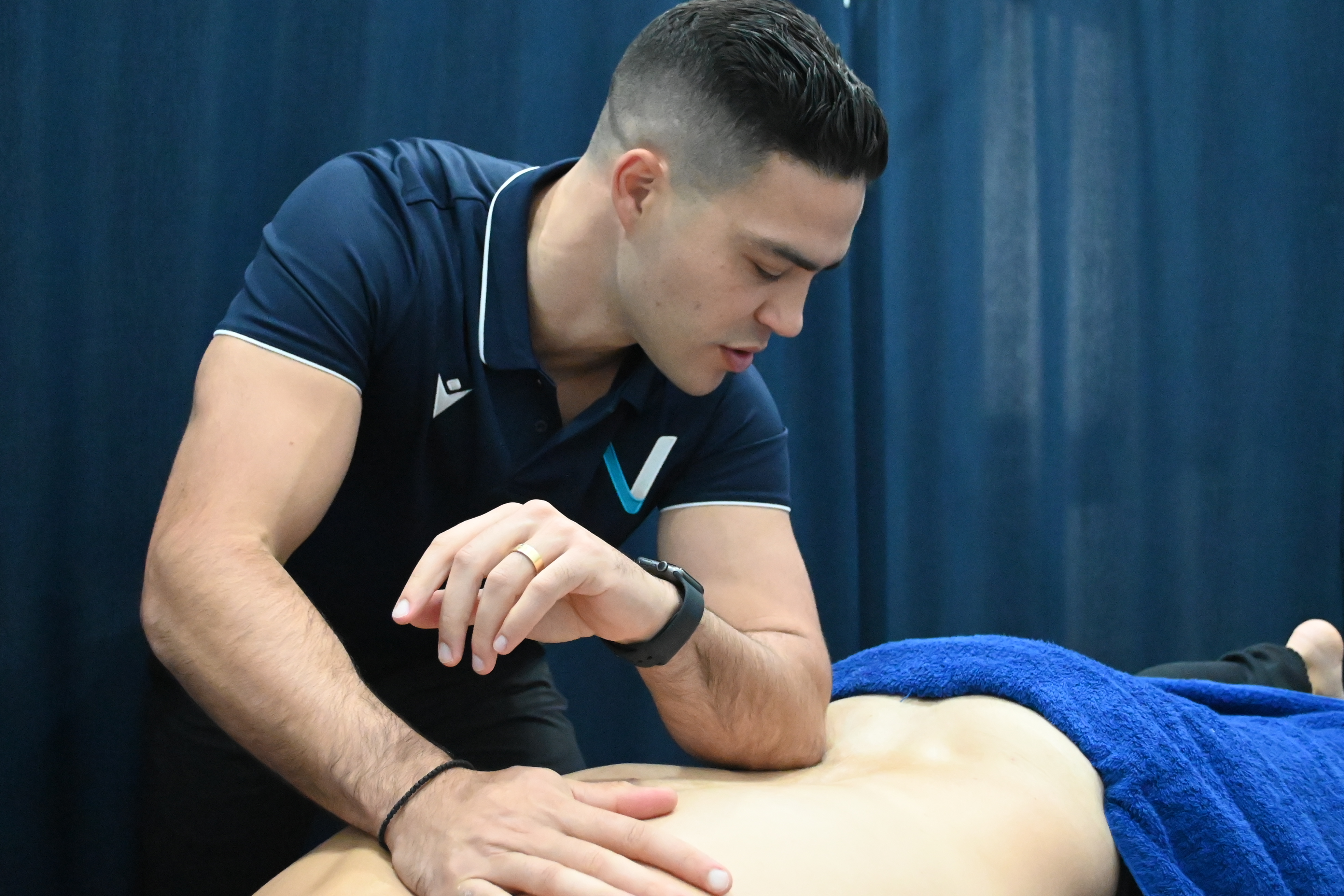
A physio screens your movement, assesses joints and soft tissue, and flags anything loading unevenly. A sports chiropractor looks at how your spine and joints are tracking, and where mobility is being held back. An exercise physiologist reviews your strength, your load tolerance, and whether your training is actually building resilience or just fatigue.
Most people don’t need all three every time. But one clinician looking at one piece of you will miss things. A runner with a sore knee might have a tight hip, a weak glute, and a stiff lower back all contributing. That’s not a single-discipline problem, and treating it like one is why injuries come back.
A simple maintenance schedule
Treat this as a starting point, not a prescription. Adjust based on your load and history.
- Train three or more times a week, or play a competitive sport: every 4 to 6 weeks.
- Active but recreational (gym, walks, weekend sport): every 8 to 12 weeks
- Sit at a desk most of the day and don’t do much else: every 8 to 12 weeks, and we should probably have a separate conversation about the sitting.
That’s somewhere between 4 and 12 appointments a year. Routine health, not crisis management.
Signs you’re overdue
Quick self-check. If you tick three or more, you’re overdue:
- A niggle that’s been there for two weeks or more.
- One side of your body feels noticeably different from the other.
- You’ve backed off training because of “something”.
- Your sleep, recovery, or performance has dropped and you can’t put your finger on why.
- You haven’t been seen by anyone since your last injury, and that was more than six months ago.
- You’re compensating in workouts (skipping exercises, changing your running form, dropping weight).
Pain is the last symptom to show up. It’s the loudest signal after a long list of quieter ones most people have been ignoring.
The bit most people miss
The best thing about going in before you’re injured is that the conversation is completely different. You’re not in pain, you’re not rushed, and you’re not desperate for a fix. The clinician gets to do the work properly. Screening. Strength testing. Movement analysis. They’re not firefighting.
That’s where the real gains live. Better mechanics. Smarter load management. Fewer days lost to injury. More consistent training across the year.
One appointment this week
If you’ve read this far, you probably already know your body’s been asking for attention. Book a maintenance appointment, get a proper screening, and build the habit before you’re the one texting your team on Sunday to say you can’t play.
Book a maintenance appointment at VIBE Homebush or Seven Hills. One visit now is cheaper than six later.